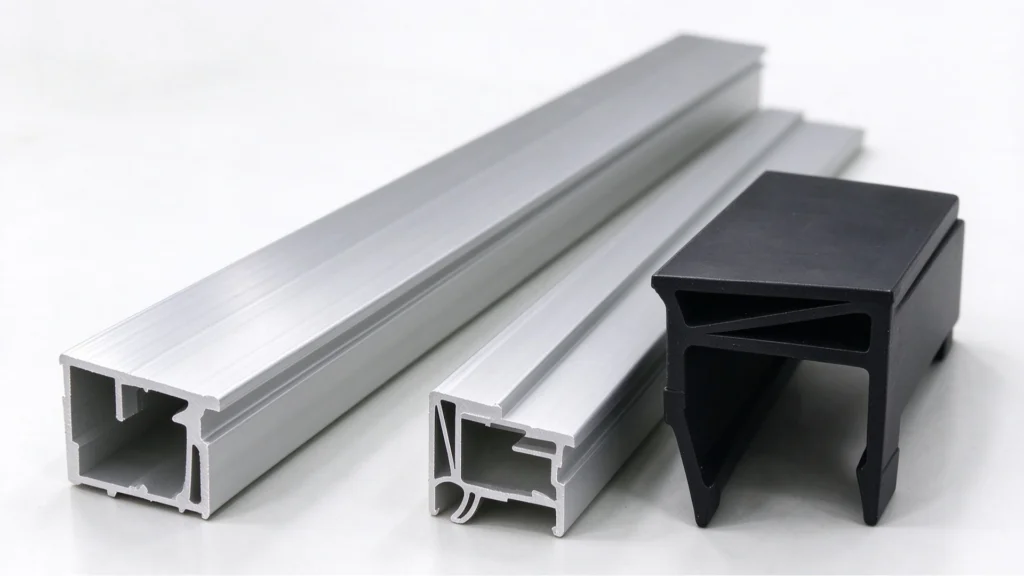


When a US modular home manufacturer brought us twenty profile designs for their foldable housing system, the brief sounded simple: make the parts.
It was not simple. Twenty designs had to become seventeen shippable products — sealing strips, panel connectors, trims — and every one of them had to close against an interface that already existed in the building system. A profile that is perfect on its own drawing but off by a hair against its mating part is not a part. It is scrap.
That is usually where a project like this stalls. Capacity for seventeen profiles is one problem. Getting eight dies through sampling, modification and approval on a single calendar is a different one.
The Difficulty Was Never the Extrusion Itself
Three things decide whether a multi-profile project lands or drags:
Twenty designs had to become seventeen. Some designs could be consolidated, some needed re-dimensioning, some did not survive review at all. That decision belongs before steel is cut — because after steel is cut, every change is paid for twice.
Every profile had to fit something that already existed. The reference was never our own drawing. It was the client’s mating part, already in production, already toleranced. We had to hit someone else’s numbers, not ours.
Eight dies are a shared resource. Run them in parallel and one late modification holds up everything scheduled behind it. Run them one at a time and the project misses its window. There is no comfortable middle.
How We Ran It
1. DFM before steel
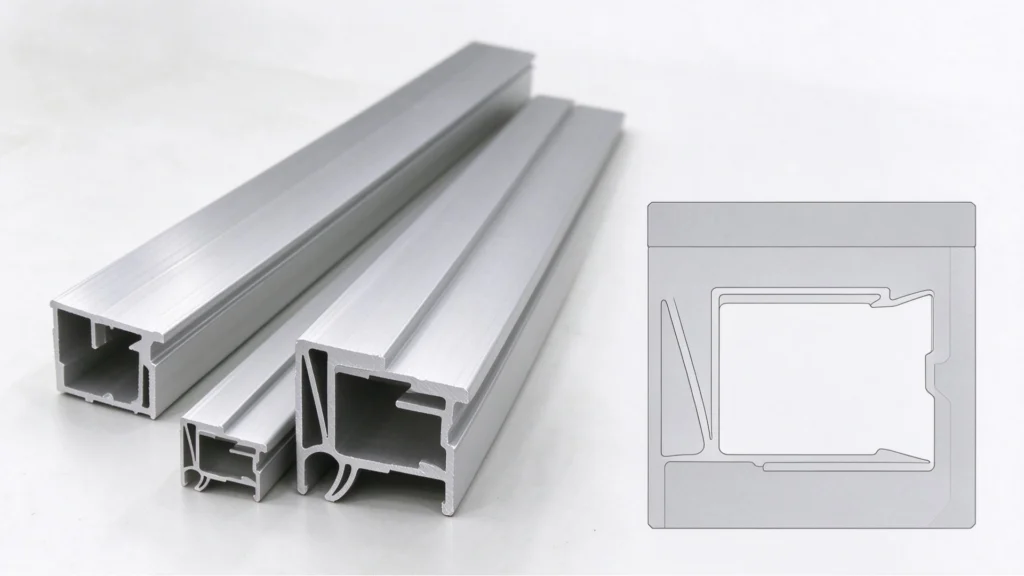
We reviewed all twenty designs first — wall thickness, draw, tolerance stack-up — and told the client which ones we would change and why. Some conversations are cheaper before tooling than after.
2. Eight dies, one schedule
All eight custom extrusion dies were developed in parallel, covering the seventeen final products. Parallel tooling only works when there is one calendar, one sampling queue and one person who can make a call. Otherwise eight tools quietly become eight bottlenecks.
3. Modification driven by samples, not by opinion
Where a trial sample sat outside the fit window, we changed the die — die land, die lip, calibration — rather than asking the client to absorb the difference on the assembly line. Prototyping is not a formality here; it is where a drawing becomes a part that fits.
4. Packed for the distance
Extruded profiles are long, light and easy to bow in transit. A profile that arrives bent is a rejected profile, no matter how good it was when it left. We built custom wooden cases sized to the profile lengths so the parts arrive ready to install.
What Working With Us Actually Means
If you are sourcing custom profiles — extrusion, custom injection molding, or a mix of both — here is what you get from us on a project like this one:
- You get told no early. If a design will not hold tolerance economically, you hear it before tooling, not after the invoice.
- You get one contact. The same person who reviews your drawings is the one who answers when the shipment is late.
- The fit is checked against your part, not our drawing. We ask for the mating part. It is the only way to know a profile actually closes.
- Molding and finishing sit in one building. When a profile needs a counterpart, a trim or a sub-assembly, it does not travel to a third supplier and back.
What the Client Said
“Your team handled 20 designs and 17 final products professionally. The coordination across multiple tools was impressive, and the extrusion profiles fit our building system perfectly.”
Sourcing Profiles for a Modular or Panelised System?
Send us the drawings. We will review them for manufacturability before anything is quoted, and tell you what we would change and why.
Send drawings for a manufacturability review →
What to include
- Profile drawings — STEP, DWG, DXF or a dimensioned PDF
- The mating part, if the profile has to close against one
- Material, or the application if the material is still open
- Quantity and target market, so export packing can be quoted with it
What comes back
A manufacturability note on each profile — what works, what we would change, what it would cost to tool — plus a quote for the parts. If something in the drawing is unclear, you get a question instead of an assumption.